 Katla Ice Cave Tours
Is the Katla Ice Cave Safe? Honest Answer, and Who Should Not Go
Search for a Katla ice cave collapse and you land on a real accident that did not happen at Katla. On 25 August 2024 an ice cave collapsed at Breiðamerkurjökull, inside Vatnajökull National Park about 190 km east of here, killing one visitor and seriously injuring another in a group of 23. Kötlujökull is a different glacier under different management, and it sits outside the national park, so the rules written after that accident do not govern it. That cuts both ways, and this page explains why, what the guides at Katla actually do before each group walks in, and which travellers are turned away.
Quick answer
Guided visits to the Katla ice cave carry the ordinary risks of standing under moving glacier ice, managed by a guide who inspects the chamber before every group and cancels when it fails. The fatal collapse of August 2024 happened at Breiðamerkurjökull in the southeast, not at Kötlujökull, and Katla sits outside Vatnajökull National Park, so the park's post-accident rules do not apply here. What governs this glacier is each operator's own inspection routine, which is a reason to look at how long a company has run the track before booking.
Key takeaways
- The 2024 collapse was at Breiðamerkurjökull, about 190 km east, and involved a different glacier and a different operator
- Katla is outside the national park, so the tour you book is governed by the operator's routine rather than park rules
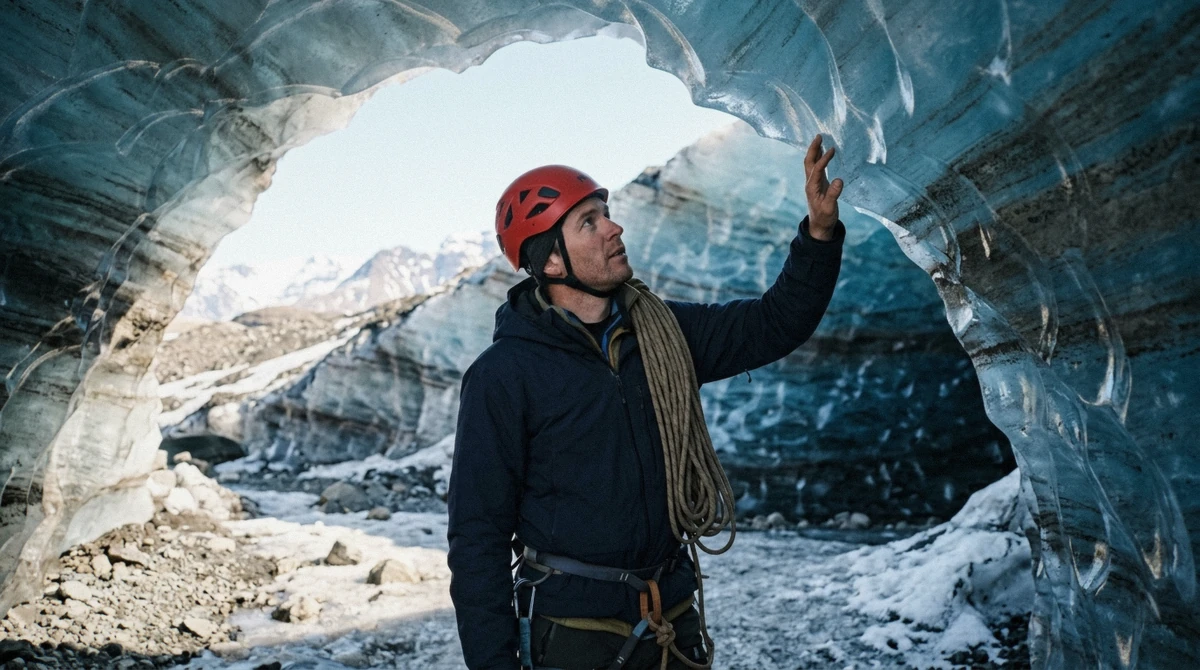
- Guides survey the chamber before every group and move cave or cancel when the roof does not look right
- The volcano is the least of it: Katla last erupted in 1918 and the Met Office watches the caldera constantly
- Two operators refuse anyone with claustrophobia or a fear of the dark; one excludes wheelchair users and people with heart conditions
- Wind, closed roads and a failed inspection cancel far more departures than volcanic unrest ever has
Who Should Reconsider
If dark or enclosed spaces make you anxious
Do not book. Two operators refuse the booking outright, and the back of the chamber is genuinely dark.
If you have a heart condition or low mobility
One operator excludes both explicitly. The walk is 1 to 2 km over uneven ice and moraine with no way to turn back alone.
If you are travelling with a child under 8
Three of the tours take children from 6 and three start at 8, so check the listing rather than assuming.
If you are pregnant
Operators leave this to you and your doctor. The walk is easy, the jeep ride across the sand plain is not smooth.
If you are nervous about the volcano
Book normally. Unrest closes the glacier long before it does anything else, and the Met Office publishes what it sees.
What Happened in Iceland in 2024, and Where
On 25 August 2024 a group of 23 visitors was at an ice cave on Breiðamerkurjökull, an outlet of Vatnajökull near the glacier lagoon at Jökulsárlón. Part of the cave collapsed. One American visitor was killed and his wife was seriously injured, and the search for others took hours because nobody could immediately confirm how many people were under the ice.
That is 190 km east of Vík by road, on a different glacier, in a different national park, with a different operator. The two caves get conflated constantly in search results, which is why a news story about Breiðamerkurjökull now sits in the results for anyone looking up Katla.
What followed was real change, and it applied where the accident happened. Vatnajökull National Park suspended ice cave tours, and from November 2024 the park required a daily assessment by the lead guide before groups enter caves on its glaciers.
Why Katla Is Not Covered by Those Rules
Kötlujökull flows off Mýrdalsjökull, which is not inside Vatnajökull National Park. The park's post-2024 assessment requirement, and the suspension that preceded it, never applied here.
We would rather say that plainly than let it look like a selling point. It means the standard at Katla is set by each operator rather than by a regulator, and that the useful question for a traveller is not which park you are in but which company you booked.
In practice the routine here predates the 2024 accident and is the same one every glacier guide in the country is trained on: look at the roof and the entrance lip before the group approaches, watch the meltwater under the floor, and be willing to walk away. The operators working this track have been doing it for between 9 and 14 years, which is checkable on their listings. We compare all of them on our guide to the Katla ice cave and its tours, and operator by operator in the Vík departures.
The Two Glaciers, Side by Side
The practical difference for a traveller is the third row. In the park, a regulator sets a floor. Here, the operator does, so the choice of company is the safety decision.
Last verified August 2026.
| Kötlujökull (Katla) | Breiðamerkurjökull (2024 collapse) | |
|---|---|---|
| Location | Off Mýrdalsjökull, 45 minutes from Vík | Off Vatnajökull, near Jökulsárlón, 190 km east |
| Inside a national park | No | Yes, Vatnajökull National Park |
| Who sets the rules | Each operator's own inspection routine | Park requirement for a daily lead-guide assessment since November 2024 |
| Season | All year | Roughly November to March |
| Ice | Blue banded with volcanic ash | Clear blue, no ash |
The Real Risks, and How Guides Manage Them
Four things can actually go wrong on a Katla tour, and none of them is an eruption.
- Ice falling at the entrance. The mouth of a cave sheds ice as the glacier moves, which is why guides inspect it before every group rather than on a schedule, and why helmets are not decorative.
- The chamber closing or changing. Kötlujökull flows, so a cave that worked in December may be a closed slot by April. Guides pick the cave that morning and tell you when it is not the one in the photographs.
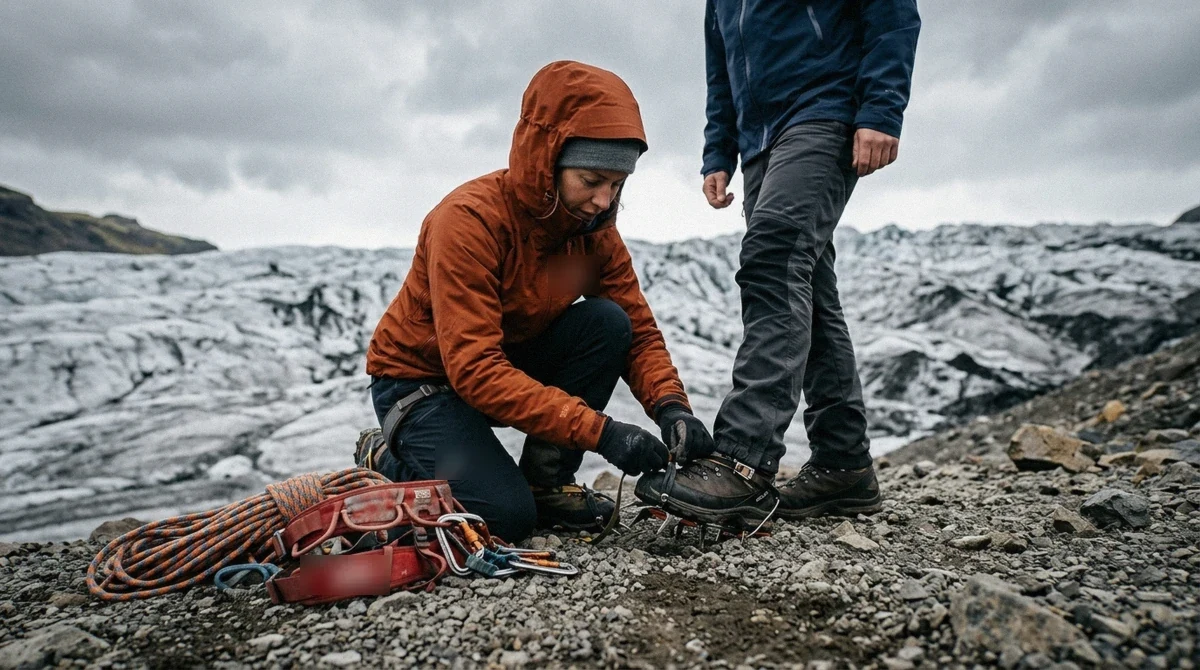
- Slipping on the walk in. Crampons are fitted over your boots at the ice edge, and the 1 to 2 km approach crosses meltwater channels bridged with planks or short ladder steps.
- The drive itself. Modified jeeps cross braided sand rivers on Mýrdalssandur with tyre pressure dropped to about 12 to 16 psi, and drivers stop to do that before the sand rather than in it.
How to Choose an Operator
Since no park authority is setting the bar here, this is where your safety decision actually gets made.
- Look at years running the track, not star ratings: the companies on our comparison have between 9 and 14 years on the platform and between 500 and 11,700 completed activities
- Look at review volume rather than a perfect average. A 5.0 from 17 reviews tells you less about a normal day than a 4.6 from 2,396
- Read the restrictions the operator publishes. A company that states plainly who should not come is a company that has thought about it
- Check whether the listing admits the cave changes and cannot be guaranteed. All the serious ones do
- Prefer a small group if you are nervous: capped groups mean the guide can watch everyone at the entrance
Who Is Turned Away
Boots are the other gate, and it is the one people trip over: crampons will not clamp onto trainers, and nobody in Vík rents footwear for this tour.
| Restriction | Which tours | What it means in practice |
|---|---|---|
| Minimum age 6 | Arctic Adventures, fast check-in, private 4x4 | Children walk the full 1 to 2 km themselves; nobody is carried on the ice |
| Minimum age 8 | Troll.is, small group, Reykjavík minibus | The same walk, with a higher floor set by the operator |
| Claustrophobia or fear of the dark | Troll.is and the small-group tour | Refused at booking, not managed on the day |
| Heart conditions, wheelchair users | The small-group tour from Vík | Stated on the listing as unsuitable |
| Low level of fitness | The Reykjavík minibus tour | 20 minutes on sand plus 10 minutes on ice, in boots |
| Motion sickness | The fast check-in tour | The jeep crossing is rough for 45 minutes each way |
If the Volcano Stirs
Katla is an active volcano and Icelanders take it seriously. It last erupted in 1918 and has erupted about 20 times since the country was settled, and its eruptions melt ice rather than throwing lava, producing a glacial flood that can carry an extraordinary volume of water for a few hours. The 1918 flood extended the coastline by several kilometres.
The Icelandic Met Office monitors the caldera with seismometers and GPS. Earthquake swarms under Mýrdalsjökull make the news several times a year without anything following, and if the signal changed materially, glacier access would close well before an eruption began.
In thirty years of ice cave tourism here, no visit has been interrupted by an eruption. Wind has interrupted thousands.
If Something Goes Wrong on the Day
The most likely version of something going wrong is that your tour does not run. The guide inspects the chamber, does not like what they see, and the departure is cancelled or moved to another cave. You are refunded in full, automatically, and you can also cancel yourself up to 24 hours before departure for the same.
On the ice, the group stays together and the guide's instructions are not advisory. That means walking where you are told at the entrance, keeping the helmet on inside, and saying so early if you are uncomfortable rather than at the back of the chamber.
Phone signal is thin east of Vík, so leave your plans with someone and save your booking confirmation offline before you drive out. If you are still weighing whether to book at all, our honest verdict on the cave covers the value question, and visiting on your own explains why there is no unguided version.
Common Questions
Which ice cave collapsed in Iceland?
A cave on Breiðamerkurjökull, an outlet of Vatnajökull near the Jökulsárlón glacier lagoon, on 25 August 2024. One visitor was killed and another seriously injured from a group of 23. It was about 190 km east of the Katla cave, on a different glacier inside Vatnajökull National Park, and it led the park to suspend ice cave tours and then require a daily lead-guide assessment from November 2024.
Is it safe to go to the Katla ice cave?
It carries the ordinary risks of standing under moving glacier ice, managed by a guide who inspects the chamber before each group and cancels when it fails. Helmets and crampons come with every tour, groups stay together, and the operators here have run this track for between 9 and 14 years. The honest caveat is that no regulator sets the standard at Kötlujökull, so the operator you choose matters more here than it would inside the national park.
What is the temperature inside the Katla ice cave?
Close to 0°C in every month of the year, and it barely responds to the weather outside. On a windy January morning the chamber is usually warmer than the walk in. Dress for the approach rather than the cave.
Is Katla going to erupt?
Eventually, and nobody can say when. It last erupted in 1918 and has erupted around 20 times since Iceland was settled, so it is overdue by the historical average, which Icelanders have been noting for a century. The Met Office watches the caldera with seismometers and GPS, earthquake swarms happen several times a year without an eruption, and tours would stop long before anything started.
Who should not do an ice cave tour?
Anyone uneasy in dark, enclosed spaces, since two operators refuse the booking rather than manage it on the day. One tour also excludes wheelchair users and people with heart conditions, and another rules out anyone with a low level of fitness. Children need to be 6 or 8 depending on the operator, and everyone needs boots that crampons can grip.
What happens if the tour is cancelled for safety?
You are refunded in full and nothing is charged at booking in the first place. Cancellations come from wind at the glacier, closed south coast roads, and the guide's morning inspection of the chamber, in roughly that order of frequency. December brings the most of them, which is the argument for booking the cave early in your trip.
The short version, if you came here worried by a headline: the accident you read about happened on another glacier, and this one is worked by companies that have been reading its roof for a decade or more. The risk that should actually shape your booking is not collapse or eruption but weather, and the defence against that is a free cancellation window and a date early in your trip.